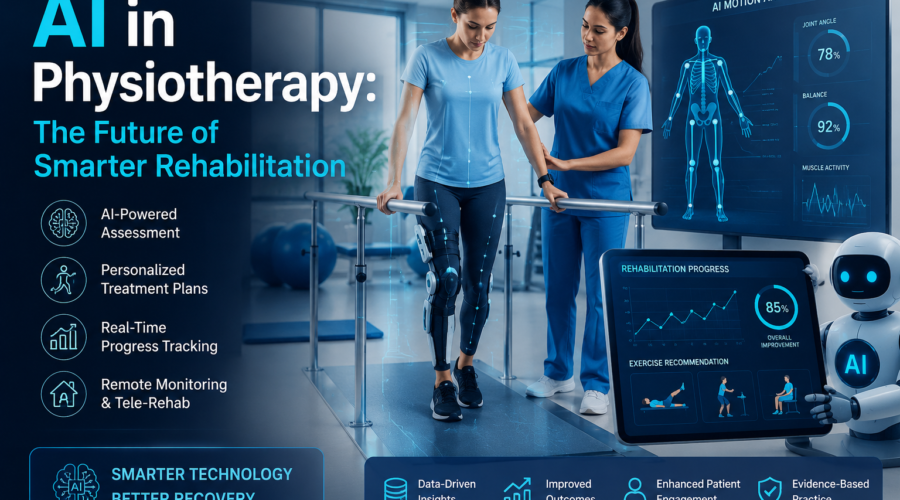
AI in Physiotherapy: The Future of Smarter Rehabilitation
Artificial Intelligence (AI) is transforming healthcare, and AI in Physiotherapy is one of the most exciting advancements in modern rehabilitation. By combining machine learning, computer vision, wearable technology, and data analytics, AI is helping physiotherapists provide more accurate diagnoses, personalised treatment plans, and improved patient outcomes.
The demand for physiotherapy services has increased significantly due to ageing populations, sports injuries, chronic pain, neurological disorders, and post-surgical rehabilitation. Traditional rehabilitation methods are effective, but they often require extensive manual assessment and continuous patient monitoring. AI-powered solutions are addressing these challenges by making rehabilitation more efficient, accessible, and data-driven.
In this article, we’ll explore how AI is reshaping physiotherapy, its key applications, benefits, challenges, and what the future holds for rehabilitation.
What Is AI in Physiotherapy?
AI in Physiotherapy refers to the use of artificial intelligence technologies to assist physiotherapists in evaluating, treating, and monitoring patients. AI systems analyse patient data, movement patterns, and medical history to support clinical decision-making and create personalised rehabilitation programmes.
Unlike conventional rehabilitation, AI can continuously learn from patient progress, allowing treatment plans to adapt automatically as recovery improves. This results in more effective and individualised care.
Why AI Is Becoming Essential in Physiotherapy
Healthcare systems worldwide face increasing pressure due to rising patient numbers and limited healthcare resources. AI helps bridge this gap by improving efficiency and reducing administrative workloads.
Some of the main reasons for adopting AI in physiotherapy include:
- Faster patient assessments
- Improved treatment accuracy
- Personalised rehabilitation plans
- Real-time patient monitoring
- Remote physiotherapy services
- Better patient engagement
- Reduced paperwork for therapists
These advantages allow physiotherapists to spend more time focusing on patient care rather than administrative tasks.
Key Applications of AI in Physiotherapy
1. AI-Powered Movement Analysis
One of the most valuable applications of AI is motion analysis. Using cameras, smartphone apps, or wearable sensors, AI can accurately evaluate body movements without expensive laboratory equipment.
It can measure:
- Joint angles
- Range of motion
- Walking patterns
- Balance
- Posture
- Muscle coordination
This enables physiotherapists to identify movement abnormalities quickly and monitor improvements over time.
2. Personalised Exercise Programmes
Every patient has unique rehabilitation needs. AI analyses factors such as:
- Age
- Medical history
- Injury severity
- Pain levels
- Mobility
- Recovery progress
Based on this information, AI creates customised exercise programmes that automatically adjust as patients improve. This ensures that rehabilitation remains effective throughout the recovery journey.
3. Virtual Physiotherapy
Tele-rehabilitation has become increasingly popular, especially for patients who cannot attend regular clinic visits.
AI-powered virtual physiotherapy platforms allow patients to:
- Perform guided exercises at home
- Receive instant feedback
- Track progress through mobile applications
- Connect with physiotherapists remotely
This improves accessibility while reducing travel costs and waiting times.
4. Wearable Technology
Wearable devices have become an essential part of modern rehabilitation.
Examples include:
- Smart watches
- Motion sensors
- Fitness trackers
- Smart knee braces
- EMG sensors
These devices collect real-time data, including:
- Walking speed
- Heart rate
- Step count
- Joint movement
- Muscle activity
AI analyses this information and provides detailed reports that help physiotherapists make informed treatment decisions.
5. Predictive Analytics
AI can predict patient recovery by analysing previous rehabilitation outcomes.
It helps physiotherapists estimate:
- Recovery timelines
- Risk of re-injury
- Exercise compliance
- Treatment effectiveness
- Potential complications
Predictive analytics allows clinicians to intervene early if recovery is slower than expected.
6. AI-Based Pain Assessment
Pain assessment often relies on patient feedback, which can be subjective. AI improves this process by analysing:
- Facial expressions
- Body posture
- Voice changes
- Movement patterns
This provides therapists with additional information when monitoring patient discomfort and recovery progress.
Benefits of AI in Physiotherapy
Improved Clinical Accuracy
AI analyses thousands of data points within seconds, reducing the likelihood of human error and supporting evidence-based clinical decisions.
Personalised Rehabilitation
AI creates treatment plans tailored to each patient’s needs, helping maximise recovery and improve satisfaction.
Better Patient Engagement
Gamified rehabilitation apps, reminders, and instant feedback encourage patients to complete exercises consistently, leading to better outcomes.
Remote Patient Monitoring
Physiotherapists can monitor progress remotely through wearable devices and mobile applications, making follow-up care more convenient.
Increased Efficiency
AI automates documentation, progress tracking, and reporting, saving valuable time for healthcare professionals.
Cost-Effective Care
Although initial investment may be high, AI can reduce long-term healthcare costs by improving efficiency and reducing unnecessary clinic visits.
AI in Sports Physiotherapy
Professional athletes increasingly rely on AI-assisted rehabilitation to recover quickly and safely.
AI helps sports physiotherapists by:
- Analysing athletic performance
- Detecting muscle imbalances
- Preventing injuries
- Monitoring rehabilitation
- Determining return-to-play readiness
These insights allow athletes to return to competition with a lower risk of re-injury.
AI in Neurological Rehabilitation
Patients recovering from stroke, spinal cord injuries, or neurological disorders require long-term rehabilitation.
AI supports neurological physiotherapy through:
- Robotic gait training
- Balance improvement
- Upper limb rehabilitation
- Motor learning exercises
- Cognitive rehabilitation programmes
Continuous monitoring enables therapists to evaluate even small improvements that might otherwise be difficult to measure.
AI and Robotic Rehabilitation
Robotic rehabilitation devices work alongside physiotherapists to assist patients with repetitive therapeutic exercises.
Examples include:
- Robotic exoskeletons
- Smart rehabilitation gloves
- Robotic arms
- Walking assistance robots
These systems are particularly effective for patients with severe mobility impairments.
Challenges of AI in Physiotherapy
Despite its many benefits, AI also presents certain challenges.
High Implementation Costs
Advanced AI systems and rehabilitation robots require significant investment, which may not be affordable for smaller clinics.
Data Privacy
Protecting patient information is essential. Healthcare providers must ensure secure storage and ethical use of patient data.
Need for Professional Training
Physiotherapists need training to understand AI systems and integrate them into clinical practice effectively.
Technology Dependence
AI should complement—not replace—the clinical expertise, empathy, and hands-on skills of physiotherapists.
Future of AI in Physiotherapy
The future of physiotherapy is expected to become even more technology-driven.
Emerging trends include:
- AI-powered rehabilitation assistants
- Smart rehabilitation mirrors
- Virtual Reality (VR) therapy
- Augmented Reality (AR) rehabilitation
- Digital twin technology
- Intelligent rehabilitation robots
- AI-assisted clinical decision support
- Home-based rehabilitation platforms
As these innovations mature, patients will benefit from more personalised, engaging, and efficient rehabilitation experiences.
Best Practices for Physiotherapists Using AI
To maximise the benefits of AI:
- Stay updated with the latest AI technologies.
- Use AI to support—not replace—clinical judgement.
- Continuously monitor patient progress.
- Ensure ethical use of patient data.
- Combine AI insights with evidence-based practice.
- Educate patients about AI-assisted rehabilitation.
Conclusion
Artificial Intelligence is transforming physiotherapy by making rehabilitation smarter, more accurate, and highly personalised. From movement analysis and wearable technology to predictive analytics and robotic rehabilitation, AI empowers physiotherapists to deliver better patient care while improving efficiency.
As technology continues to evolve, AI will become an indispensable tool in physiotherapy clinics, hospitals, sports rehabilitation centres, and home healthcare. However, the human expertise, empathy, and clinical judgement of physiotherapists will always remain central to successful rehabilitation. The future lies in a collaborative approach where AI enhances, rather than replaces, the skills of healthcare professionals.
Frequently Asked Questions (FAQs)
1. What is AI in physiotherapy?
AI in physiotherapy uses technologies such as machine learning, computer vision, and wearable sensors to support patient assessment, treatment planning, and rehabilitation.
2. Can AI replace physiotherapists?
No. AI is a supportive tool that enhances clinical decision-making, but it cannot replace the expertise, communication, and hands-on treatment provided by qualified physiotherapists.
3. What are the benefits of AI in rehabilitation?
Benefits include personalised treatment plans, faster assessments, remote monitoring, improved patient engagement, and better clinical efficiency.
4. How do wearable devices help in physiotherapy?
Wearables collect real-time data on movement, posture, heart rate, and activity levels, enabling therapists to monitor recovery and adjust treatment plans.
5. What is the future of AI in physiotherapy?
Future developments include AI-assisted diagnosis, VR and AR rehabilitation, robotic therapy, predictive recovery models, and intelligent home-based rehabilitation systems.