Here’s an SEO-friendly blog of approximately 1,000 words on the topic “Prompt Engineering Training for Non-Technical Teams”.
Prompt Engineering Training for Non-Technical Teams: A Complete Guide for Modern Businesses
Artificial Intelligence (AI) is changing the way businesses work. From writing emails and creating marketing content to analyzing reports and improving customer service, AI tools like ChatGPT, Gemini, and Microsoft Copilot have become valuable workplace assistants.
However, simply using AI is not enough. To get accurate, relevant, and useful results, employees need to know how to communicate with AI effectively. This is where Prompt Engineering Training for Non-Technical Teams becomes essential.
The good news is that prompt engineering doesn’t require coding knowledge. Employees in marketing, HR, sales, finance, customer support, education, and administration can all benefit from learning how to create better prompts.
In this guide, you’ll learn what prompt engineering is, why it matters, its benefits, training methods, and best practices for non-technical professionals.
What is Prompt Engineering?
Prompt engineering is the process of writing clear and detailed instructions that help AI tools generate better responses.
Think of a prompt as a conversation with an AI assistant.
Instead of asking:
“Write an email.”
A better prompt would be:
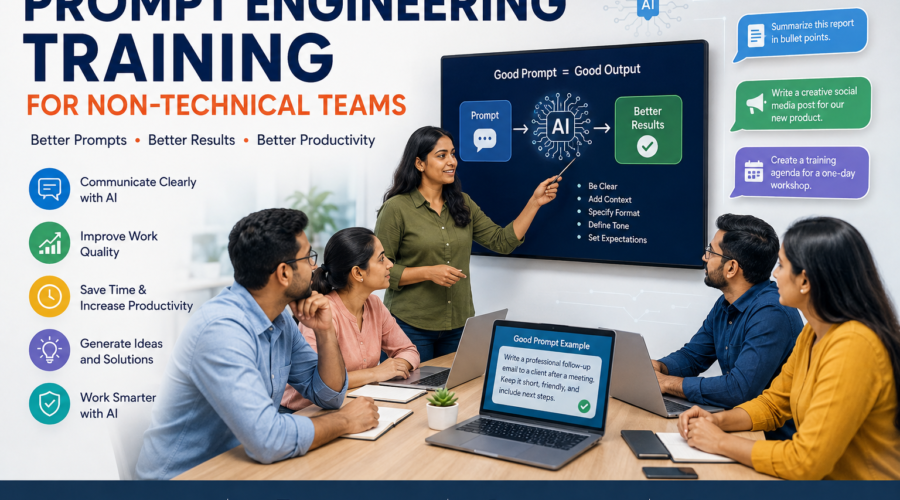
“Write a professional follow-up email thanking a customer for attending our product demo. Keep it under 150 words and include a call-to-action for scheduling the next meeting.”
The second prompt gives AI more context, resulting in higher-quality output.
Why Non-Technical Teams Need Prompt Engineering Training
Many people assume AI skills are only for programmers and data scientists.
That’s no longer true.
Today, nearly every department uses AI to automate repetitive tasks and improve productivity.
Training non-technical employees helps them:
- Save time
- Improve work quality
- Reduce manual effort
- Generate creative ideas
- Make better business decisions
- Increase productivity
Organizations that invest in AI prompt engineering training prepare their workforce for the future of work.
Benefits of Prompt Engineering Training
1. Better AI Results
Employees learn how to ask AI the right questions.
Instead of receiving generic answers, they get:
- Personalized responses
- Accurate information
- Better writing
- Detailed reports
- Creative solutions
2. Increased Productivity
Employees spend less time:
- Writing emails
- Preparing presentations
- Creating reports
- Drafting proposals
- Summarizing meetings
AI completes these tasks within minutes.
3. Improved Decision Making
Prompt engineering teaches teams how to request:
- Market analysis
- SWOT reports
- Business insights
- Customer feedback summaries
- Trend analysis
This helps managers make faster and smarter decisions.
4. Better Customer Communication
Customer support teams can create:
- Professional responses
- FAQs
- Knowledge base articles
- Chatbot scripts
- Complaint resolutions
Consistent communication improves customer satisfaction.
5. Stronger Marketing Content
Marketing teams can use AI for:
- Blog writing
- SEO content
- Social media posts
- Product descriptions
- Ad copy
- Email campaigns
Well-crafted prompts produce better marketing materials while reducing content creation time.
Departments That Benefit from Prompt Engineering
Human Resources
HR professionals can use AI for:
- Job descriptions
- Interview questions
- Employee handbooks
- Policy documents
- Performance review templates
- Training materials
Sales Teams
Sales professionals can generate:
- Sales pitches
- Cold emails
- Follow-up messages
- Proposal drafts
- Product comparisons
- Client meeting summaries
Marketing Teams
Marketing departments benefit through:
- SEO blog writing
- Social media calendars
- Content ideas
- Keyword research assistance
- Campaign planning
- Brand messaging
Customer Support
Support teams can quickly prepare:
- Customer replies
- Troubleshooting guides
- Help articles
- Ticket summaries
- Support documentation
Administrative Staff
Office administrators can use AI for:
- Meeting agendas
- Minutes of meetings
- Internal announcements
- Reports
- Scheduling assistance
- Document formatting
What Should Prompt Engineering Training Include?
A structured training program should cover:
Understanding AI Basics
Employees should learn:
- What AI is
- How generative AI works
- AI limitations
- Responsible AI usage
Writing Effective Prompts
Participants should practice creating prompts using:
- Clear instructions
- Specific goals
- Context
- Desired tone
- Target audience
- Output format
Example:
Instead of:
“Create a report.”
Use:
“Create a one-page sales report summarizing quarterly revenue, major achievements, challenges, and recommendations using bullet points.”
Refining AI Responses
Good prompt engineers know that the first answer isn’t always the final one.
Training teaches employees how to:
- Improve prompts
- Ask follow-up questions
- Add missing details
- Request revisions
- Compare multiple outputs
Practical Business Exercises
Hands-on activities may include:
- Writing emails
- Drafting proposals
- Creating presentations
- Preparing reports
- Developing marketing content
- Summarizing documents
Real-world exercises improve learning outcomes.
Best Practices for Writing AI Prompts
To get the best results from AI tools, follow these guidelines:
- Be specific and clear.
- Include background information.
- Define the target audience.
- Mention the desired tone.
- Specify the output format.
- Set word limits where appropriate.
- Break complex tasks into smaller prompts.
- Review AI-generated content before publishing.
- Protect confidential business information.
- Continue refining prompts based on results.
Common Mistakes to Avoid
Many beginners make these mistakes:
- Using vague prompts
- Asking multiple questions at once
- Providing no context
- Expecting perfect results instantly
- Blindly trusting AI responses
- Ignoring fact-checking
- Sharing sensitive company information
Proper training helps employees avoid these issues.
Future of Prompt Engineering in the Workplace
As AI becomes part of everyday business operations, prompt engineering will become a core workplace skill.
Companies are already using AI for:
- Business automation
- Customer service
- Employee training
- Project management
- Content creation
- Business analytics
- Knowledge management
Employees who understand prompt engineering will adapt more quickly to evolving AI tools and contribute more effectively to their organizations.
Conclusion
Prompt engineering is no longer a technical skill reserved for software developers. It has become an essential workplace capability for professionals across every department.
By providing Prompt Engineering Training for Non-Technical Teams, organizations empower employees to use AI confidently, improve productivity, enhance communication, and make better business decisions.
As AI continues to transform industries, businesses that invest in practical prompt engineering skills today will build more efficient, innovative, and future-ready teams.
Frequently Asked Questions (FAQs)
What is prompt engineering?
Prompt engineering is the practice of writing clear and structured instructions that help AI tools produce accurate and useful responses.
Do non-technical employees need coding skills for prompt engineering?
No. Prompt engineering focuses on communicating effectively with AI and does not require programming knowledge.
Which teams benefit most from prompt engineering training?
Marketing, HR, sales, customer support, finance, administration, education, and operations teams can all improve their productivity with prompt engineering skills.
Why is prompt engineering important for businesses?
It helps employees save time, improve the quality of AI-generated content, automate routine tasks, and make better decisions using AI tools.