
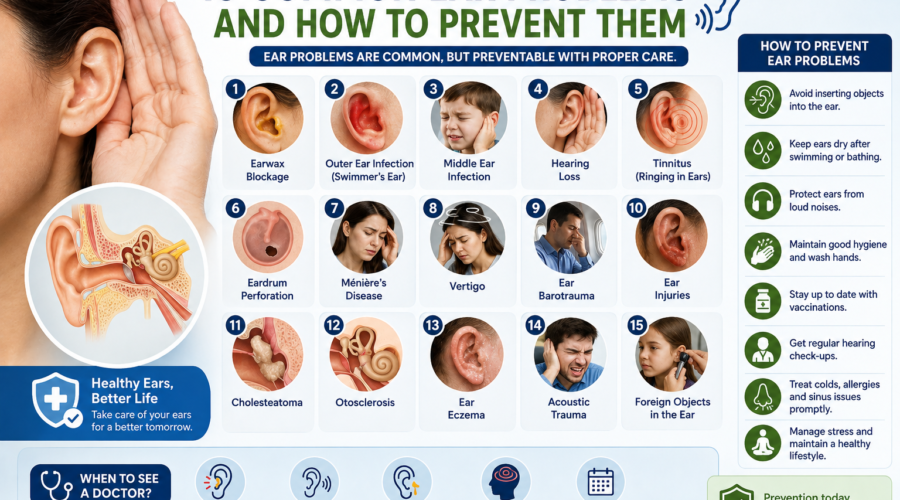
I’ve created an SEO-friendly blog of approximately 1,000 words on the topic “15 Common Ear Problems and How to Prevent Them.”
Our ears do much more than help us hear—they also play a vital role in maintaining balance. Unfortunately, ear problems are common and can affect people of all ages. While some ear conditions are minor and temporary, others may lead to hearing loss or long-term complications if left untreated.
The good news is that many ear problems can be prevented with proper ear care and healthy habits. In this guide, we’ll explore the 15 most common ear problems, their symptoms, causes, and practical ways to protect your hearing.
Why Ear Health Is Important
Healthy ears are essential for communication, learning, and overall well-being. Ignoring ear pain, hearing changes, or infections can result in serious complications. Regular ear care and early treatment help preserve hearing and reduce the risk of chronic ear diseases.
1. Earwax Blockage (Cerumen Impaction)
Earwax protects the ear canal by trapping dust and bacteria. However, excessive wax buildup can block the ear canal.
Symptoms
- Reduced hearing
- Ear fullness
- Ringing in the ears
- Mild pain
Prevention
- Avoid inserting cotton swabs or sharp objects into your ears.
- Let earwax clear naturally.
- Use ear drops only if recommended by a healthcare professional.
2. Outer Ear Infection (Swimmer’s Ear)
Swimmer’s ear is an infection of the outer ear canal caused by trapped moisture or bacteria.
Symptoms
- Ear pain
- Redness
- Swelling
- Itching
- Fluid discharge
Prevention
- Dry your ears thoroughly after swimming or bathing.
- Wear earplugs while swimming if recommended.
- Avoid scratching the ear canal.
3. Middle Ear Infection (Otitis Media)
Middle ear infections are especially common in children but can affect adults too.
Symptoms
- Ear pain
- Fever
- Temporary hearing loss
- Fluid behind the eardrum
Prevention
- Treat colds and allergies promptly.
- Practice good hand hygiene.
- Stay up to date with recommended vaccinations.
4. Hearing Loss
Hearing loss may develop gradually with age or result from prolonged exposure to loud noise, illness, or injury.
Symptoms
- Difficulty understanding conversations
- Frequently asking others to repeat themselves
- Turning up the volume excessively
Prevention
- Wear hearing protection in noisy environments.
- Limit headphone volume and listening time.
- Schedule regular hearing check-ups if you’re at risk.
5. Tinnitus (Ringing in the Ears)
Tinnitus causes ringing, buzzing, or humming sounds without an external source.
Symptoms
- Ringing
- Buzzing
- Whistling sounds
- Difficulty sleeping or concentrating
Prevention
- Protect your ears from loud noise.
- Manage stress.
- Avoid prolonged exposure to high-volume audio.
6. Eardrum Perforation
A hole or tear in the eardrum can occur due to infection, trauma, or sudden pressure changes.
Symptoms
- Sharp ear pain
- Hearing loss
- Ear discharge
- Dizziness
Prevention
- Never insert objects into the ear.
- Treat ear infections early.
- Protect your ears during activities involving pressure changes.
7. Ménière’s Disease
This inner ear disorder affects hearing and balance.
Symptoms
- Vertigo
- Hearing loss
- Tinnitus
- Ear fullness
Prevention
Although it can’t always be prevented, reducing salt intake, managing stress, and following medical advice may help reduce episodes.
8. Vertigo
Vertigo creates the sensation that you or your surroundings are spinning.
Symptoms
- Dizziness
- Nausea
- Loss of balance
Prevention
- Stay hydrated.
- Avoid sudden head movements if you’re prone to vertigo.
- Seek medical evaluation for persistent symptoms.
9. Ear Barotrauma
Pressure differences during flights or diving can affect the ears.
Symptoms
- Ear pressure
- Pain
- Temporary hearing loss
Prevention
- Swallow, yawn, or chew gum during takeoff and landing.
- Avoid flying with severe nasal congestion if possible.
10. Ear Injuries
Accidents or loud explosions can damage the ear.
Symptoms
- Pain
- Bleeding
- Hearing loss
Prevention
- Wear protective equipment during sports and hazardous work.
- Follow workplace safety guidelines.
11. Cholesteatoma
A cholesteatoma is an abnormal skin growth behind the eardrum that can damage nearby structures if untreated.
Symptoms
- Foul-smelling ear discharge
- Hearing loss
- Ear pressure
Prevention
- Treat chronic ear infections promptly.
- Attend follow-up appointments if you have recurring ear problems.
12. Otosclerosis
This condition involves abnormal bone growth in the middle ear, affecting sound transmission.
Symptoms
- Gradual hearing loss
- Tinnitus
Prevention
There is no known prevention, but early diagnosis can improve treatment outcomes.
13. Ear Eczema
Skin conditions such as eczema can affect the outer ear.
Symptoms
- Itching
- Dry skin
- Flaking
- Redness
Prevention
- Keep the ears clean and dry.
- Avoid irritants and allergens.
- Use prescribed creams when necessary.
14. Acoustic Trauma
A sudden loud sound, such as an explosion or concert, can damage hearing.
Symptoms
- Immediate hearing loss
- Ringing in the ears
- Ear pain
Prevention
- Wear ear protection in loud environments.
- Move away from high-volume speakers.
- Follow safe listening practices.
15. Foreign Objects in the Ear
Young children often place small objects in their ears.
Symptoms
- Pain
- Hearing changes
- Ear discharge
- Irritation
Prevention
- Keep small objects away from children.
- Never try to remove deeply lodged objects with tools.
- Seek medical care for safe removal.
General Tips for Healthy Ears
Follow these habits to reduce the risk of ear problems:
- Avoid inserting cotton swabs or sharp objects into your ears.
- Keep your ears dry after swimming or bathing.
- Use hearing protection around loud machinery or music.
- Maintain a healthy lifestyle to support overall ear health.
- Treat colds, allergies, and sinus infections promptly.
- Schedule routine hearing evaluations if you notice changes.
- Follow medical advice for recurring ear issues.
When Should You See a Doctor?
Seek medical attention if you experience:
- Severe ear pain
- Sudden hearing loss
- Persistent ringing in the ears
- Ear discharge, especially if foul-smelling or bloody
- Dizziness lasting more than a day
- Symptoms that do not improve after a few days
Early diagnosis and treatment can help prevent long-term hearing problems.
Conclusion
Ear problems are common, but many are preventable with proper care and healthy habits. Protecting your ears from loud noise, keeping them dry, avoiding inserting objects into the ear canal, and seeking prompt medical care for persistent symptoms can significantly reduce the risk of complications.
By understanding these 15 common ear problems and how to prevent them, you can take proactive steps to maintain healthy hearing and improve your overall quality of life.
Frequently Asked Questions (FAQs)
What is the most common ear problem?
Earwax buildup and ear infections are among the most common ear conditions affecting both children and adults.
Can ear problems cause hearing loss?
Yes. Some conditions, such as chronic infections, loud noise exposure, or eardrum damage, can lead to temporary or permanent hearing loss if not treated.
How can I keep my ears healthy?
Keep your ears dry, avoid inserting objects into the ear canal, protect your hearing from loud sounds, and seek medical advice for persistent ear symptoms.
Should I use cotton swabs to clean my ears?
No. Cotton swabs can push earwax deeper into the ear canal and increase the risk of injury. The ears usually clean themselves naturally.